Point 6: Agricultural Growth and Food Resilience
For generations, the fertile soils of St. Croix, St. Thomas, and St. John have promised abundance. Yet today, the U.S. Virgin Islands imports about 97% of its food. This reliance leaves our community exposed to global supply chain disruptions, extreme weather, and rising grocery bills.
Under Point 6 of the Donastorg/Nelson Platform — Agricultural Growth and Food Resilience, local food production is no longer treated as an afterthought. Instead, it is elevated into what it must be: a central pillar of economic development and territorial sovereignty.
Overcoming the Bottlenecks: A Blueprint for Growth
Turning vulnerability into food independence requires solving longstanding structural challenges that have held back our growers:
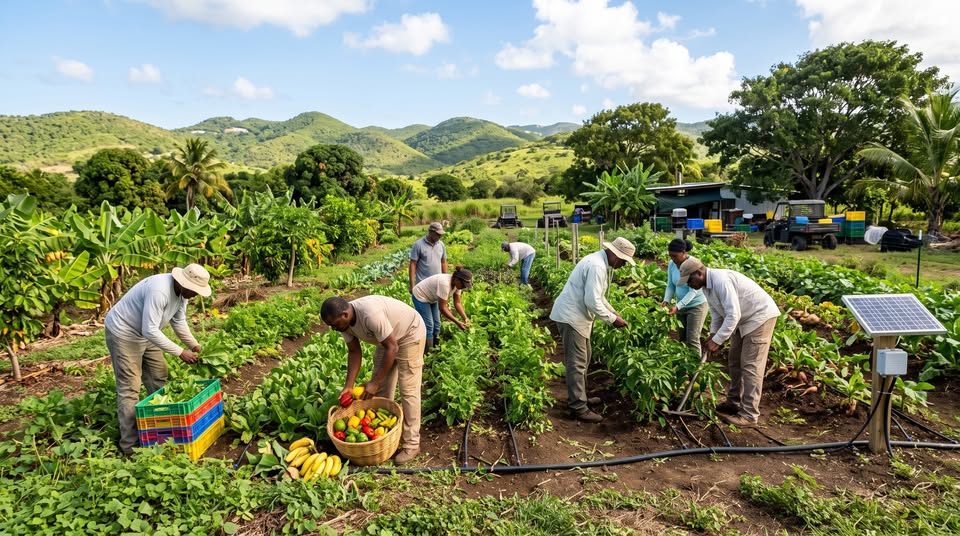
- Water Infrastructure & Resilience: Drought and limited access to water grids can make or break a harvest. By scaling rainwater catchment, building resilient cistern networks, and integrating solar-powered pumping alongside drip irrigation, we can give farmers dependable, cost-effective water access year-round.
- Processing & Cold-Chain Logistics: Hard work in the field means little if crops spoil before reaching market shelves. Upgrading packing facilities, modern cold storage, and certified slaughterhouses bridges the gap between local harvests and commercial distribution across island grocers, schools, and restaurants.
- Grant Management & Technical Capacity: Capital exists, but red tape often blocks small growers from accessing it. Hands-on administrative support and streamlined grant access will ensure local operators get the funding they need to expand.
- Arable Land Utilization & Security: Sustainable farming demands long-term stability. Clear, dependable agricultural land leases, coupled with investments in soil restoration and heavy preparation machinery, will help growers plan future harvests with confidence.
Local Leadership & Strategic Partnerships
Real transformation happens when territorial leadership, research institutions, and the private sector pull in the same direction:
- Virgin Islands Agricultural Plan (VI Ag Plan): Driven by the Local Food and Farm Council (LFFC), this plan serves as the territory’s strategic roadmap to boost domestic production and create meaningful jobs.
- VI Department of Agriculture (VIDA): Delivering hands-on operational backing through heavy equipment rentals, subsidized agricultural leases, and community tree crop initiatives.
- UVI Cooperative Extension & Business Center (VI-ABC): A powerhouse collaboration between the University of the Virgin Islands and the VI Small Business Development Center (VI SBDC), equipping farmers with tropical agronomic research and business know-how.
- USVI Economic Development Authority (USVIEDA): Linking ag-tech startups and commercial producers to tax incentives, low-interest revolving loans, and diversification capital.
Maximizing Federal Capital
Our local efforts are reinforced by targeted federal investments designed to de-risk operations and build long-term capacity:
Federal Agency & Program Direct Benefit to USVI Growers
USDA NRCS (EQIP) Technical assistance and funding for soil conservation, erosion control, and micro-irrigation systems.
USDA Farm Service Agency (FSA) Direct/guaranteed farm loans and emergency capital via the Emergency Conservation Program (ECP) after severe weather.
USDA / VIDA Sub-Grants (MGFSP) Micro-Grants for Food Security awarded directly to small-scale growers, community gardens, and youth ag initiatives.
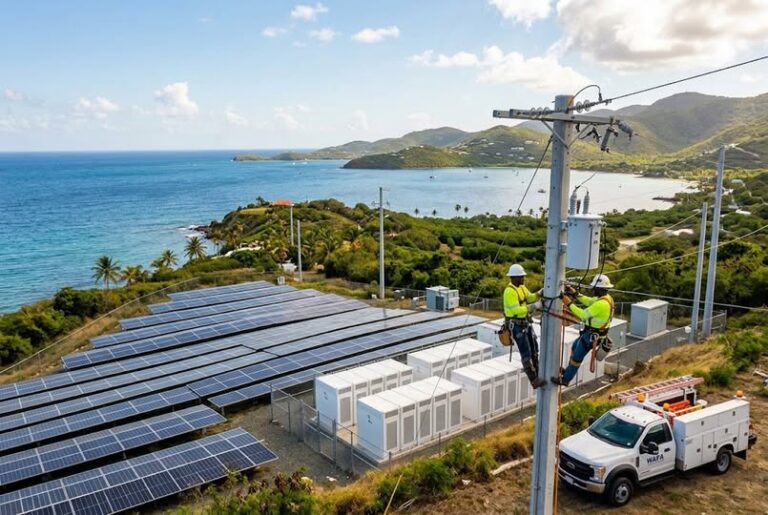
USDA Rural Development (REAP) Grants and loans to install renewable energy systems, drastically lowering electric bills for irrigation and farm facilities.
The Path Forward
Achieving food security is not merely an agricultural ambition—it is an economic necessity and a matter of survival. By investing in our farmers, modernizing infrastructure, and uniting government resources with community passion, the Virgin Islands can feed its own people and build a self-reliant future.
Fast, Forward, Together.